
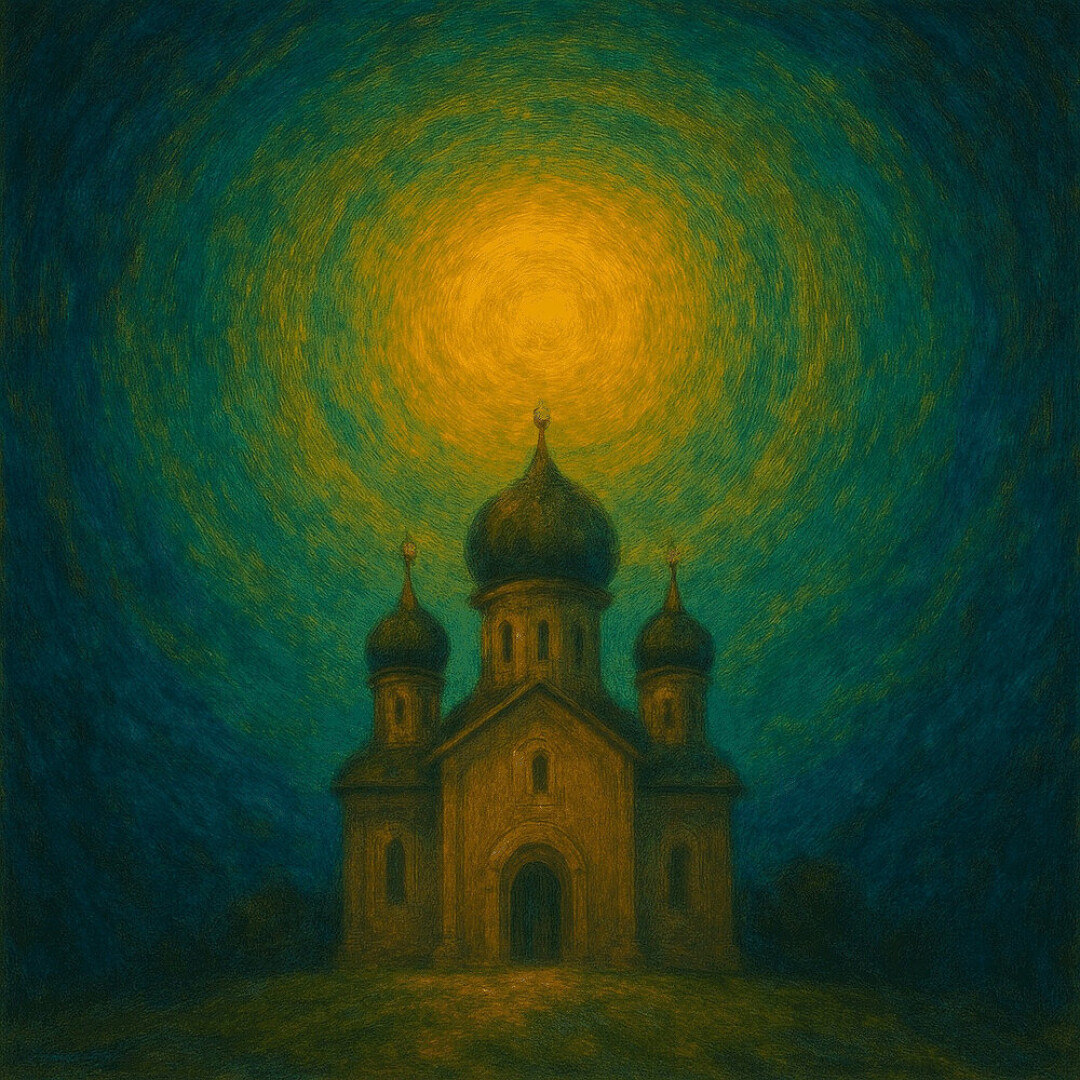
The Blessed Season of Epiphany is upon us, and in this we should rejoice. The reality that God chose to reveal Himself to all peoples, that He wants to be known not only by those who already know Him or are nearby but by those who are far—this is celebrated in Epiphanytide—it is the core truth we should never lose from view.
Celebration is certainly in order, for it is this reality that has allowed the followers of Christ in our Diocese, primarily descendants of Gentiles, to be grafted into God's family. Yet more than 2,000 years have passed, and the reality of the Epiphany—His deep desire that all humans should know Him—is not yet known among all peoples of the earth. So while celebration is in order, let us also be challenged this season of Epiphany.
My family and I come from Russia, and we hope to return there later this year for Anglican Gospel ministry. Russia is big. It covers more than 10 time zones. The Russian language is the 9th most spoken language in the world. That is over 250 million speakers—150 million of them live in Russia. It is a strategic place to get the Gospel, as recent years have shown—Russia's ability to inflict death and destruction on its neighbors and the world at large has only grown. Yet most estimates point to less than 2% of Russians knowing God as He was revealed at Epiphany. When I worked as a school teacher among almost 300 individuals—staff, teachers, and students—I was the only practicing Christian. When my wife came to Christ through the Navigators, she quickly went to her mom to share the Good News—and you know what her mom said after hearing it? "This is wonderful". How come nobody told me before?" 
Peter's speech in the New Testament reading is indeed excellent news. He proclaims, "God shows no partiality, but in every nation anyone who fears him and does what is right is acceptable to him," and that Christ came to preach "good news of peace." In Russia, a land of constant war—war against one's own people, war against neighbors, war against God Himself—there can be no better news. Most of us have seen enough news to know that the Russian state oppresses and breaks, therefore, isn't Peter's proclamation that Jesus came "healing all who were oppressed by the devil" exactly the Good News that Russians need? Today's Old Testament reading from Isaiah 42 only deepens this Epiphany reality: Christ came for the "bruised reed," the "smoldering wick," the blind and the captive. We too are the same without Christ—yet if we know world history and geography, we know there are whole countries and peoples, Russia among them, where, without the light of Epiphany, the entire nation is blind and captive, its people bruised reeds.
How, then, could my mother-in-law, living 2,000 years after Epiphany, have only been told of the Good News recently? How could a country the size of Russia, with its strategic importance, have so few followers of Jesus? We could blame Satan, but all the readings make it clear that Satan's power compared to Jesus' (who Peter proclaims "Lord of all") is nothing. We could blame God—but that would be blasphemy in light of the reality made clear in Epiphany. We must then look in the mirror—examine our own souls, our families, our churches—and ask ourselves, whose responsibility is it to continue to proclaim the Good News to all the nations? Will we go even to our enemies—to God's enemies—where it is not safe? Where Satan has oppressed for hundreds, if not thousands, of years? Make no mistake—my mother-in-law's reaction was beautiful, but rare. Many more will laugh at us, spit on us, persecute, or kill us when the news of the Epiphany first reaches them. Will we go anyway? Epiphany should be a great joy to every follower of Christ, a joy that overshadows any sense of guilt. However, it should also be a great challenge for us, because it is a joy that comes with a great responsibility for the nations.
As Anglicans this season, we begin our liturgy with the celebrant saying, "I will make you as a light for the nations." The people then reply, "That my salvation may reach to the end of the earth." What if we not only rejoiced in this promise about Christ and His church, but saw it as our own challenge in this season? To be that light that channels God's salvation to the end of the earth by partnering with ministry workers like myself who are not yet on the field and need the body of Christ to get there and be sustained once there?!
The author and his family attend Holy Trinity Anglican Church in Chapel Hill, North Carolina. His wife is a child therapist with a deep love for people and a rare gift with children. They spent over a decade living and ministering in Russia before coming to the U.S. for rest and seminary, where they first encountered Anglicanism—a tradition they believe holds real promise in a Russian Orthodox context. They have four bilingual children, whom they homeschool in two languages. Newly commissioned with Anglican Frontier Missions, they are preparing to return home to Russia by the fall of 2026.
If you would like to learn more about their work for the Kingdom in Russia, you can reach the author at . For security reasons, further details cannot be shared publicly. But to bring the Good News to Russia, they need Gospel partners. Could God be calling you to join their team this Epiphanytide?